 Image 1 of 1
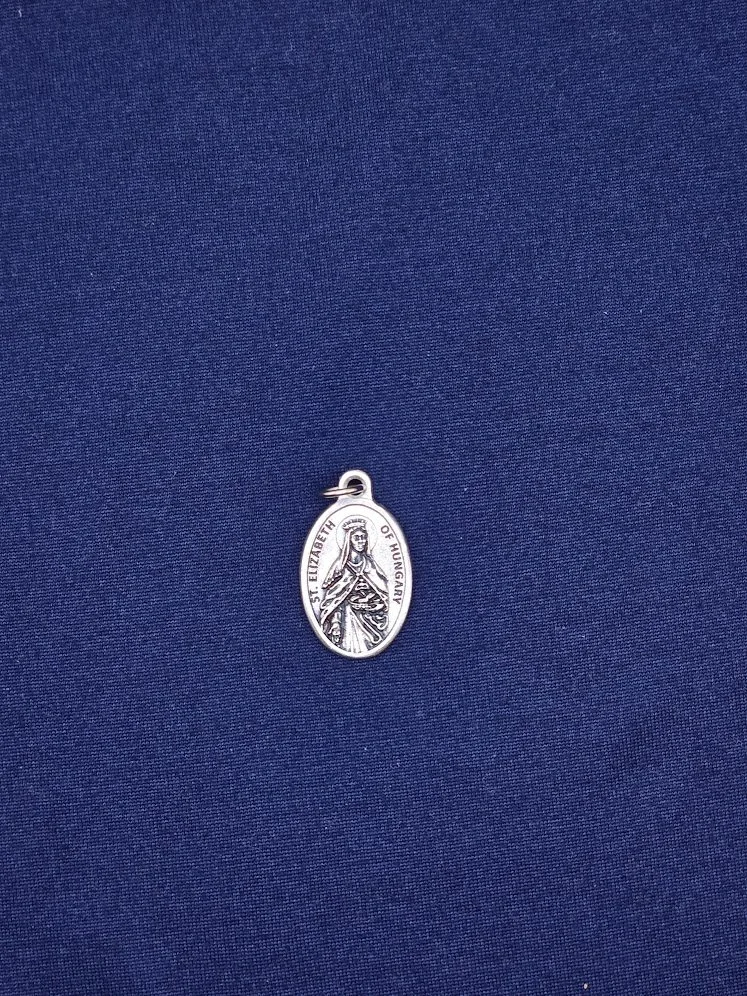
Saint Elizabeth of Hungary (1207–1231), also known as Saint Elizabeth of Thuringia, was a Hungarian princess, queen, widow, and one of the most beloved saints of charity and service to the poor.
Born in 1207 in Hungary, Elizabeth was the daughter of King Andrew II of Hungary. At the age of 14, she was married to Ludwig IV, the Landgrave of Thuringia (Germany). She was a devoted wife and mother of three children. Known for her deep piety and generosity even as a young royal, she would secretly give food, clothing, and money to the poor.
After her husband died during the Fifth Crusade in 1227, Elizabeth was cruelly driven out of the Wartburg Castle by her brother-in-law. She then embraced a life of radical poverty and service. She joined the Third Order of St. Francis, built hospitals, cared personally for lepers and the sick, and gave away nearly everything she owned to feed the hungry. She died at only 24 years old on November 17, 1231. She was canonized just four years later in 1235. Her feast day is November 17.
Saint Elizabeth of Hungary is widely venerated as the patron saint of:
Charitable organizations and charity workers
Bakers (especially those baking bread for the poor)
Widows and single mothers
The poor, the homeless, and beggars
Nurses and hospital workers
Brides and newlyweds
Exiles, refugees, and victims of injustice
Material: Zinc alloy
Quantity: 1
Size: 25mm × 16mm (0.98" × 0.63")
Hole: 1.5mm (0.05")
She is famously depicted carrying a basket of bread or roses. According to legend, when her husband once questioned what she was carrying under her cloak to the poor, the bread miraculously turned into roses.
Her life remains a powerful example of using privilege for radical love and service to the suffering.
Saint Elizabeth of Hungary (1207–1231), also known as Saint Elizabeth of Thuringia, was a Hungarian princess, queen, widow, and one of the most beloved saints of charity and service to the poor.
Born in 1207 in Hungary, Elizabeth was the daughter of King Andrew II of Hungary. At the age of 14, she was married to Ludwig IV, the Landgrave of Thuringia (Germany). She was a devoted wife and mother of three children. Known for her deep piety and generosity even as a young royal, she would secretly give food, clothing, and money to the poor.
After her husband died during the Fifth Crusade in 1227, Elizabeth was cruelly driven out of the Wartburg Castle by her brother-in-law. She then embraced a life of radical poverty and service. She joined the Third Order of St. Francis, built hospitals, cared personally for lepers and the sick, and gave away nearly everything she owned to feed the hungry. She died at only 24 years old on November 17, 1231. She was canonized just four years later in 1235. Her feast day is November 17.
Saint Elizabeth of Hungary is widely venerated as the patron saint of:
Charitable organizations and charity workers
Bakers (especially those baking bread for the poor)
Widows and single mothers
The poor, the homeless, and beggars
Nurses and hospital workers
Brides and newlyweds
Exiles, refugees, and victims of injustice
Material: Zinc alloy
Quantity: 1
Size: 25mm × 16mm (0.98" × 0.63")
Hole: 1.5mm (0.05")
She is famously depicted carrying a basket of bread or roses. According to legend, when her husband once questioned what she was carrying under her cloak to the poor, the bread miraculously turned into roses.
Her life remains a powerful example of using privilege for radical love and service to the suffering.