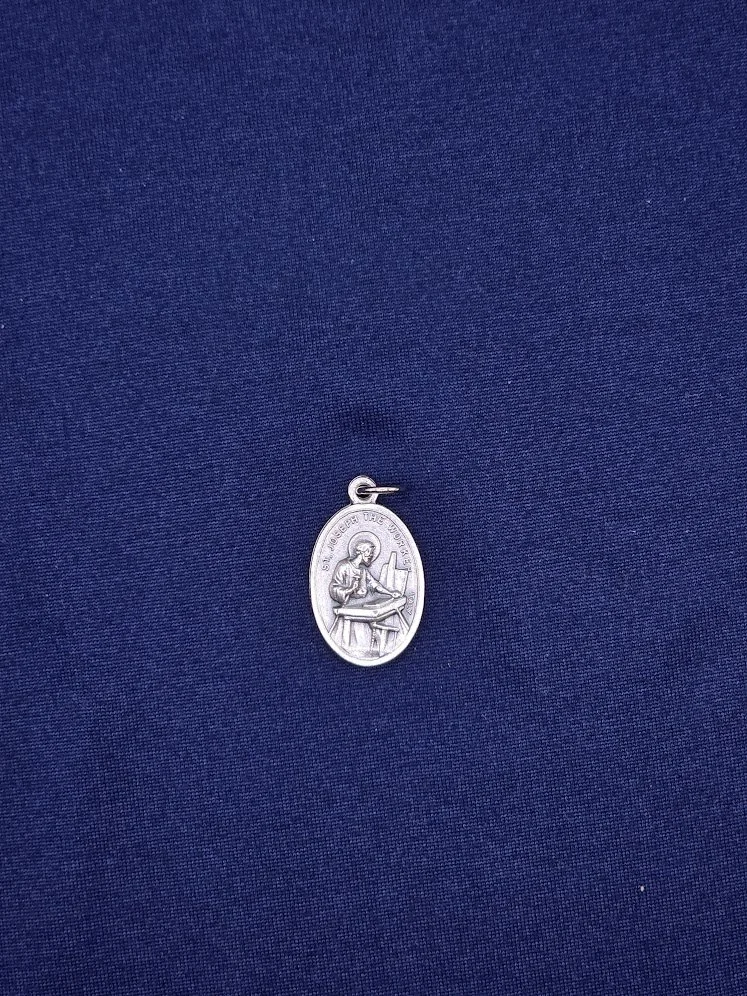
Saint Thérèse of Lisieux (1873–1897), also known as Saint Thérèse of the Child Jesus and the Little Flower, is one of the most popular and beloved saints of modern times.
Born Marie-Françoise-Thérèse Martin in Alençon, France, she was the youngest of nine children. After her mother died when she was only four, her family moved to Lisieux. Thérèse felt called to religious life from a very young age. She entered the Carmelite convent in Lisieux at just 15 years old.
She lived a hidden, ordinary life as a nun, doing simple daily tasks. She is most famous for developing her “Little Way” — a simple, childlike path to holiness based on doing small things with great love for God. She trusted completely in God’s mercy and offered even her smallest actions and sufferings as gifts to Jesus.
She suffered greatly from tuberculosis and spiritual darkness in the last years of her short life, but she remained joyful and faithful. She died on September 30, 1897, at the age of 24. She was canonized in 1925 by Pope Pius XI and declared a Doctor of the Church in 1997 by Pope St. John Paul II. Her feast day is October 1.
Saint Thérèse is venerated as the patron saint of:
Missions and missionaries (named patroness of the missions in 1927)
Florists and flower growers (because of her promise to “let fall a shower of roses” from heaven)
People suffering from tuberculosis or lung diseases
Those who feel spiritually small or inadequate
Children and young people
Pilots and aircrew (in some traditions)
She is often called “The Greatest Saint of Modern Times.” She promised that after her death she would spend her heaven doing good on earth and sending “a shower of roses” as signs of her intercession.
She is usually depicted as a young Carmelite nun holding roses or a crucifix with roses.
Saint Thérèse of Lisieux (1873–1897), also known as Saint Thérèse of the Child Jesus and the Little Flower, is one of the most popular and beloved saints of modern times.
Born Marie-Françoise-Thérèse Martin in Alençon, France, she was the youngest of nine children. After her mother died when she was only four, her family moved to Lisieux. Thérèse felt called to religious life from a very young age. She entered the Carmelite convent in Lisieux at just 15 years old.
She lived a hidden, ordinary life as a nun, doing simple daily tasks. She is most famous for developing her “Little Way” — a simple, childlike path to holiness based on doing small things with great love for God. She trusted completely in God’s mercy and offered even her smallest actions and sufferings as gifts to Jesus.
She suffered greatly from tuberculosis and spiritual darkness in the last years of her short life, but she remained joyful and faithful. She died on September 30, 1897, at the age of 24. She was canonized in 1925 by Pope Pius XI and declared a Doctor of the Church in 1997 by Pope St. John Paul II. Her feast day is October 1.
Saint Thérèse is venerated as the patron saint of:
Missions and missionaries (named patroness of the missions in 1927)
Florists and flower growers (because of her promise to “let fall a shower of roses” from heaven)
People suffering from tuberculosis or lung diseases
Those who feel spiritually small or inadequate
Children and young people
Pilots and aircrew (in some traditions)
She is often called “The Greatest Saint of Modern Times.” She promised that after her death she would spend her heaven doing good on earth and sending “a shower of roses” as signs of her intercession.
She is usually depicted as a young Carmelite nun holding roses or a crucifix with roses.