 Image 1 of 2
 Image 2 of 2
Saint Benedict (also known as Saint Benedict of Nursia, c. 480–547 AD) is widely regarded as the Father of Western Monasticism. Born into a noble family in Nursia (modern Norcia, Italy), he studied in Rome but was disillusioned by the city's moral decay. He left to live as a hermit in a cave near Subiaco for three years, then began founding monasteries.
Around 529, he established the famous Monte Cassino monastery, where he wrote the Rule of Saint Benedict — a balanced guide for monastic life emphasizing prayer (ora), work (labora), moderation, obedience, and community. This Rule became the foundation for Benedictine monasteries across Europe and shaped much of Western Christian monastic tradition. He died at Monte Cassino around 547. His feast day is July 11 (formerly March 21).
Saint Benedict is venerated as the patron saint of:
Europe (declared by Pope Paul VI in 1964 for the role of Benedictine monks in preserving and building European civilization)
Monastics and monks (especially Benedictines)
Students and schoolchildren
Against poisoning (from a legend where he miraculously survived poisoned wine)
Kidney disease sufferers and those with certain illnesses
Agricultural workers, cavers, civil engineers, and against witchcraft
He is also invoked by dying people and in protection from various dangers.
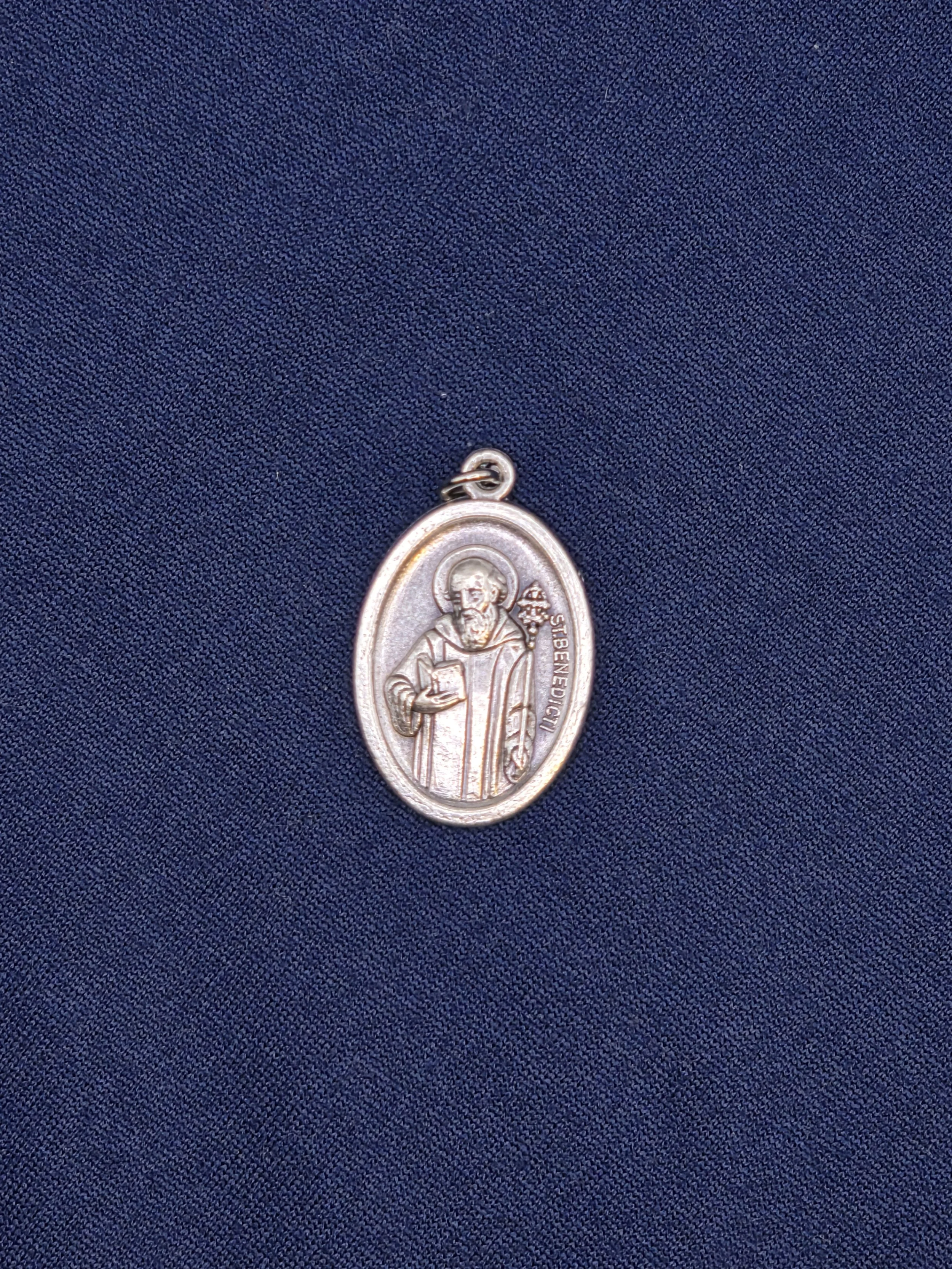
He is often depicted as an abbot with a crosier, a raven (from a legend), a broken cup (poison), or a bell. His legacy of balanced spiritual life continues to influence monasteries and lay spirituality today.
Saint Benedict (also known as Saint Benedict of Nursia, c. 480–547 AD) is widely regarded as the Father of Western Monasticism. Born into a noble family in Nursia (modern Norcia, Italy), he studied in Rome but was disillusioned by the city's moral decay. He left to live as a hermit in a cave near Subiaco for three years, then began founding monasteries.
Around 529, he established the famous Monte Cassino monastery, where he wrote the Rule of Saint Benedict — a balanced guide for monastic life emphasizing prayer (ora), work (labora), moderation, obedience, and community. This Rule became the foundation for Benedictine monasteries across Europe and shaped much of Western Christian monastic tradition. He died at Monte Cassino around 547. His feast day is July 11 (formerly March 21).
Saint Benedict is venerated as the patron saint of:
Europe (declared by Pope Paul VI in 1964 for the role of Benedictine monks in preserving and building European civilization)
Monastics and monks (especially Benedictines)
Students and schoolchildren
Against poisoning (from a legend where he miraculously survived poisoned wine)
Kidney disease sufferers and those with certain illnesses
Agricultural workers, cavers, civil engineers, and against witchcraft
He is also invoked by dying people and in protection from various dangers.
He is often depicted as an abbot with a crosier, a raven (from a legend), a broken cup (poison), or a bell. His legacy of balanced spiritual life continues to influence monasteries and lay spirituality today.