 Image 1 of 2
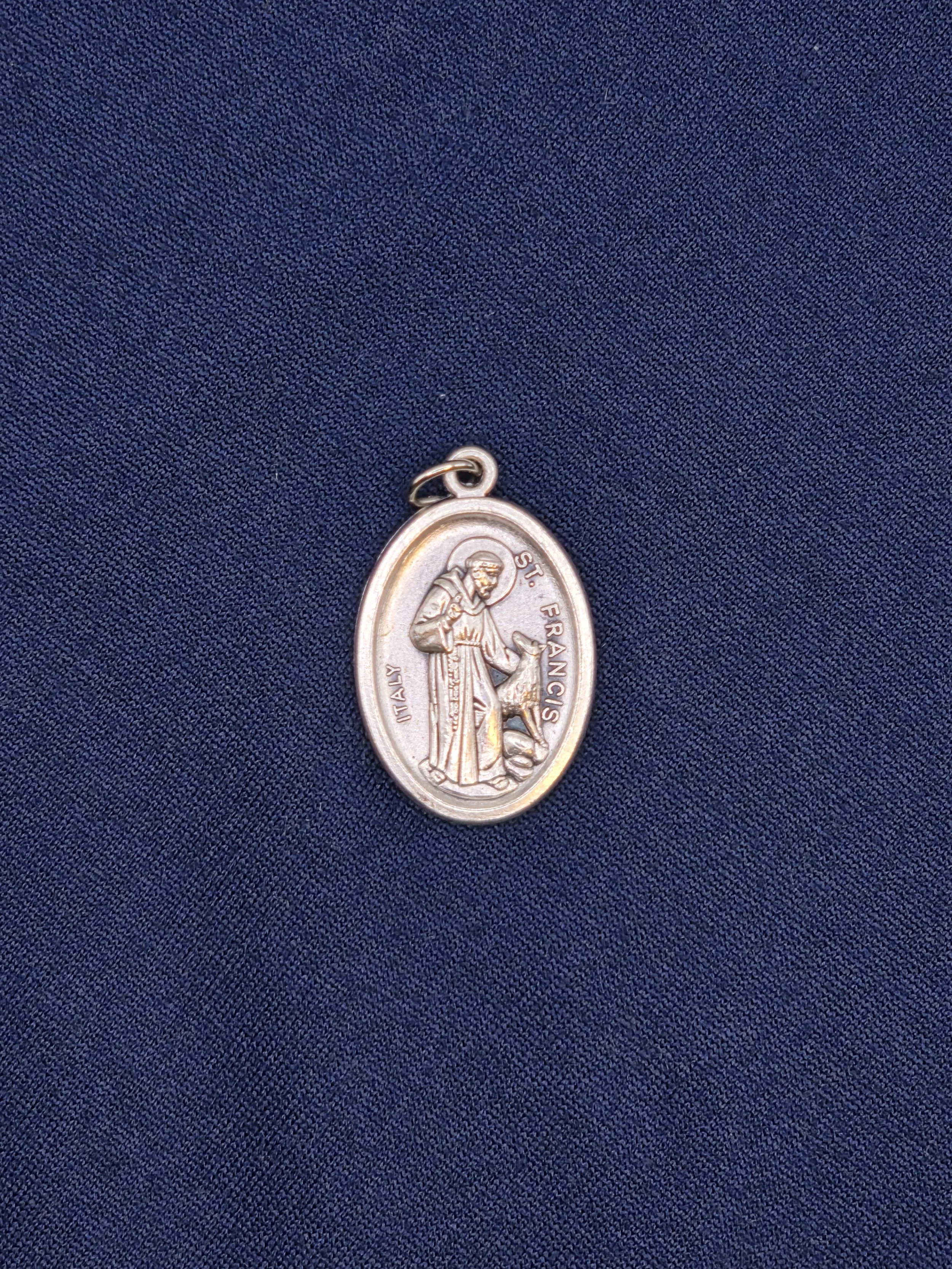 Image 2 of 2
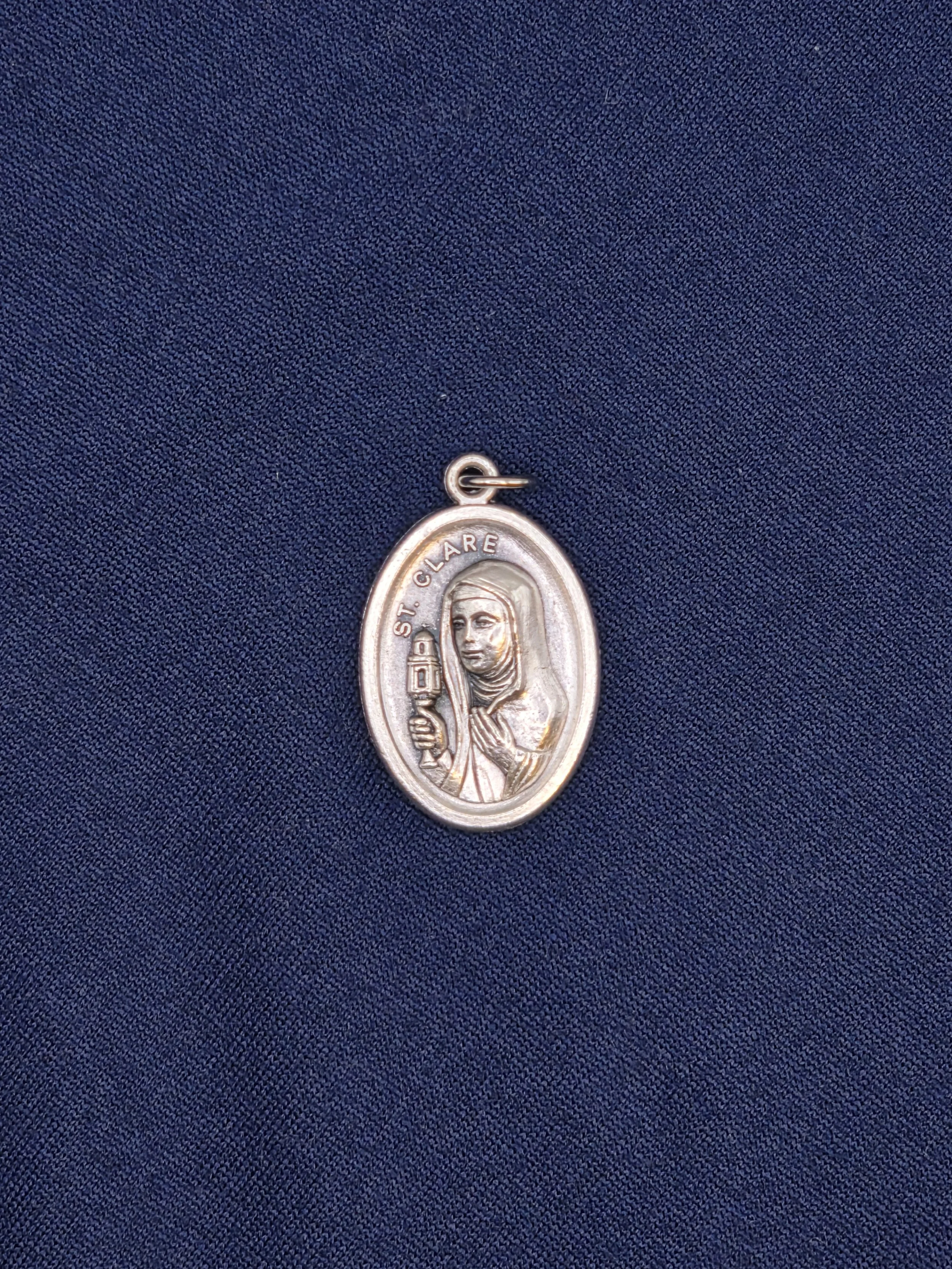
Saint Clare (also known as Saint Clare of Assisi, 1194–1253) was an Italian noblewoman who became one of the first followers of Saint Francis of Assisi and the founder of the Poor Clares (Order of Poor Ladies), the second Franciscan order for women.
Born Chiara Offreduccio in Assisi, Italy, she was moved by Francis’s preaching and, at age 18, ran away from home to join him. She took a vow of poverty and founded a community of nuns who lived in complete poverty, prayer, and seclusion at the convent of San Damiano. Clare emphasized radical poverty (even stricter than the male Franciscans at times), manual labor, and deep devotion to the Eucharist. She famously defended her convent from invading soldiers by holding up the Blessed Sacrament, causing the attackers to flee. She was the first woman to write her own religious Rule, which was approved shortly before her death. She died on August 11, 1253, and was canonized just two years later in 1255. Her feast day is August 11.
Saint Clare is venerated as the patron saint of:
Television (declared by Pope Pius XII in 1958, because while ill she was miraculously able to see and hear Mass on the wall of her room)
Clarity of vision / eye diseases and the blind
Embroiderers and needleworkers
Laundry workers and good weather (in some traditions)
The Poor Clares and women living contemplative religious life
She is also invoked against fires and for protection of crops.
She is often depicted in the gray or white habit of the Poor Clares, holding a monstrance (the vessel for the Blessed Sacrament) or a palm branch. Her life of joyful poverty and deep prayer continues to inspire many, especially women in religious orders.
Saint Francis most commonly refers to Saint Francis of Assisi (1181/82–1226), one of the most beloved saints in Christian history.
Born Giovanni di Pietro di Bernardone in Assisi, Italy, to a wealthy merchant family, he lived a wild and extravagant youth. After a serious illness and a spiritual conversion, he dramatically renounced his wealth, embraced radical poverty, and dedicated his life to preaching the Gospel, serving the poor and lepers, and showing love for all creation.
In 1209 he founded the Franciscan Order (Friars Minor). He is famous for preaching to birds and animals, receiving the stigmata (the wounds of Christ) in 1224, and writing the Canticle of the Sun. He died on October 3, 1226, and was canonized in 1228. His feast day is October 4.
Saint Francis of Assisi is widely venerated as the patron saint of:
Animals, birds, and ecology / the environment (he is the official patron saint of ecology)
Italy (co-patron with St. Catherine of Siena)
Merchants and traders
Environmentalists, ecologists, and animal lovers
He is also patron of families, peace, and several other causes.
He is usually shown in a simple brown Franciscan habit, often surrounded by animals or displaying his stigmata.
Saint Clare (also known as Saint Clare of Assisi, 1194–1253) was an Italian noblewoman who became one of the first followers of Saint Francis of Assisi and the founder of the Poor Clares (Order of Poor Ladies), the second Franciscan order for women.
Born Chiara Offreduccio in Assisi, Italy, she was moved by Francis’s preaching and, at age 18, ran away from home to join him. She took a vow of poverty and founded a community of nuns who lived in complete poverty, prayer, and seclusion at the convent of San Damiano. Clare emphasized radical poverty (even stricter than the male Franciscans at times), manual labor, and deep devotion to the Eucharist. She famously defended her convent from invading soldiers by holding up the Blessed Sacrament, causing the attackers to flee. She was the first woman to write her own religious Rule, which was approved shortly before her death. She died on August 11, 1253, and was canonized just two years later in 1255. Her feast day is August 11.
Saint Clare is venerated as the patron saint of:
Television (declared by Pope Pius XII in 1958, because while ill she was miraculously able to see and hear Mass on the wall of her room)
Clarity of vision / eye diseases and the blind
Embroiderers and needleworkers
Laundry workers and good weather (in some traditions)
The Poor Clares and women living contemplative religious life
She is also invoked against fires and for protection of crops.
She is often depicted in the gray or white habit of the Poor Clares, holding a monstrance (the vessel for the Blessed Sacrament) or a palm branch. Her life of joyful poverty and deep prayer continues to inspire many, especially women in religious orders.
Saint Francis most commonly refers to Saint Francis of Assisi (1181/82–1226), one of the most beloved saints in Christian history.
Born Giovanni di Pietro di Bernardone in Assisi, Italy, to a wealthy merchant family, he lived a wild and extravagant youth. After a serious illness and a spiritual conversion, he dramatically renounced his wealth, embraced radical poverty, and dedicated his life to preaching the Gospel, serving the poor and lepers, and showing love for all creation.
In 1209 he founded the Franciscan Order (Friars Minor). He is famous for preaching to birds and animals, receiving the stigmata (the wounds of Christ) in 1224, and writing the Canticle of the Sun. He died on October 3, 1226, and was canonized in 1228. His feast day is October 4.
Saint Francis of Assisi is widely venerated as the patron saint of:
Animals, birds, and ecology / the environment (he is the official patron saint of ecology)
Italy (co-patron with St. Catherine of Siena)
Merchants and traders
Environmentalists, ecologists, and animal lovers
He is also patron of families, peace, and several other causes.
He is usually shown in a simple brown Franciscan habit, often surrounded by animals or displaying his stigmata.