 Image 1 of 1
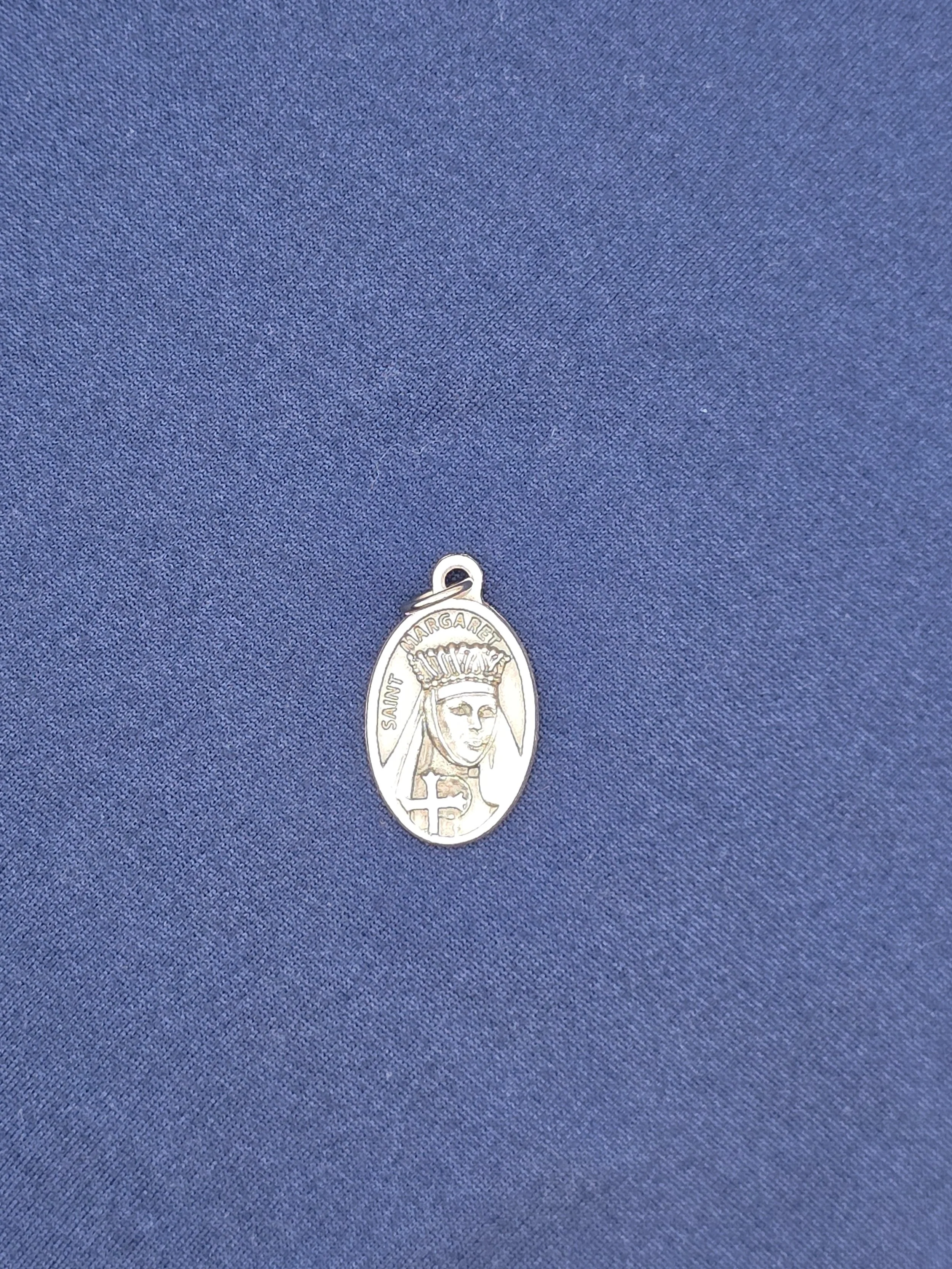
Saint Margaret most commonly refers to Saint Margaret of Antioch (also known as Saint Marina in the East), a legendary early Christian virgin martyr from the late 3rd or early 4th century.
According to tradition, Margaret was a beautiful young Christian woman in Antioch (modern-day Turkey). She refused to marry a pagan Roman prefect and was tortured for her faith. One famous (and highly legendary) story says the devil appeared to her in prison as a dragon and swallowed her, but she made the sign of the cross, causing the dragon to burst open and release her unharmed. She was eventually beheaded around 304 AD during the Diocletian persecution. She is one of the Fourteen Holy Helpers. Her feast day is traditionally July 20 (though it was removed from the universal Roman Calendar in 1969 due to the legendary nature of her story, local devotion remains strong).
Saint Margaret of Antioch is widely venerated as the patron saint of:
Pregnant women and expectant mothers (especially those in difficult or complicated labor)
Childbirth and safe deliveries
Women in labor
Against demonic attacks or possession
Nurses and those who care for the sick
She is often depicted as a young woman holding a cross and standing over or emerging from a dragon.
Note: There are other well-known saints named Margaret, including:
Saint Margaret of Scotland (1045–1093) — Queen, wife of Malcolm III, known for her charity and piety. Patron of Scotland, large families, widows, and the poor. Feast day: November 16.
Saint Margaret Mary Alacoque (1647–1690) — Visitation nun who promoted devotion to the Sacred Heart of Jesus. Patron of devotees of the Sacred Heart and those suffering from polio.
When people simply say “St. Margaret” (especially in the context of patron saints for women or childbirth), they most often mean Margaret of Antioch.
Saint Margaret most commonly refers to Saint Margaret of Antioch (also known as Saint Marina in the East), a legendary early Christian virgin martyr from the late 3rd or early 4th century.
According to tradition, Margaret was a beautiful young Christian woman in Antioch (modern-day Turkey). She refused to marry a pagan Roman prefect and was tortured for her faith. One famous (and highly legendary) story says the devil appeared to her in prison as a dragon and swallowed her, but she made the sign of the cross, causing the dragon to burst open and release her unharmed. She was eventually beheaded around 304 AD during the Diocletian persecution. She is one of the Fourteen Holy Helpers. Her feast day is traditionally July 20 (though it was removed from the universal Roman Calendar in 1969 due to the legendary nature of her story, local devotion remains strong).
Saint Margaret of Antioch is widely venerated as the patron saint of:
Pregnant women and expectant mothers (especially those in difficult or complicated labor)
Childbirth and safe deliveries
Women in labor
Against demonic attacks or possession
Nurses and those who care for the sick
She is often depicted as a young woman holding a cross and standing over or emerging from a dragon.
Note: There are other well-known saints named Margaret, including:
Saint Margaret of Scotland (1045–1093) — Queen, wife of Malcolm III, known for her charity and piety. Patron of Scotland, large families, widows, and the poor. Feast day: November 16.
Saint Margaret Mary Alacoque (1647–1690) — Visitation nun who promoted devotion to the Sacred Heart of Jesus. Patron of devotees of the Sacred Heart and those suffering from polio.
When people simply say “St. Margaret” (especially in the context of patron saints for women or childbirth), they most often mean Margaret of Antioch.