 Image 1 of 1
Saint Paul (also known as Saint Paul the Apostle or Saul of Tarsus, c. 5 – c. 67 AD) is one of the most important figures in Christian history and the greatest missionary of the early Church.
Born Saul in Tarsus (modern-day Turkey) to a Jewish family. He was a Roman citizen and a zealous Pharisee who actively persecuted Christians.
Around the year 36 AD, while traveling to Damascus to arrest Christians, he had a dramatic encounter with the risen Jesus. A bright light blinded him and he heard Jesus say, “Saul, Saul, why are you persecuting me?” This event is known as the Conversion of St. Paul.
After his conversion and baptism, he changed his name to Paul and became the greatest apostle to the Gentiles (non-Jews).
He made three major missionary journeys across the Roman Empire, founding many churches.
He wrote 13 letters (epistles) that are part of the New Testament, including Romans, Corinthians, Galatians, and Philippians. These letters form a large part of Christian theology.
He was arrested in Jerusalem, appealed to Caesar, and was eventually martyred in Rome by beheading around 67 AD during Nero’s persecution.
His feast day is June 29 (celebrated together with St. Peter).
Saint Paul is venerated as the patron saint of:
Missionaries and evangelists
Gentiles (non-Jews) and converts
Writers, journalists, and publishers
Theologians
Tent makers and rope makers (his trade)
People with eye problems (because he was blinded during his conversion)
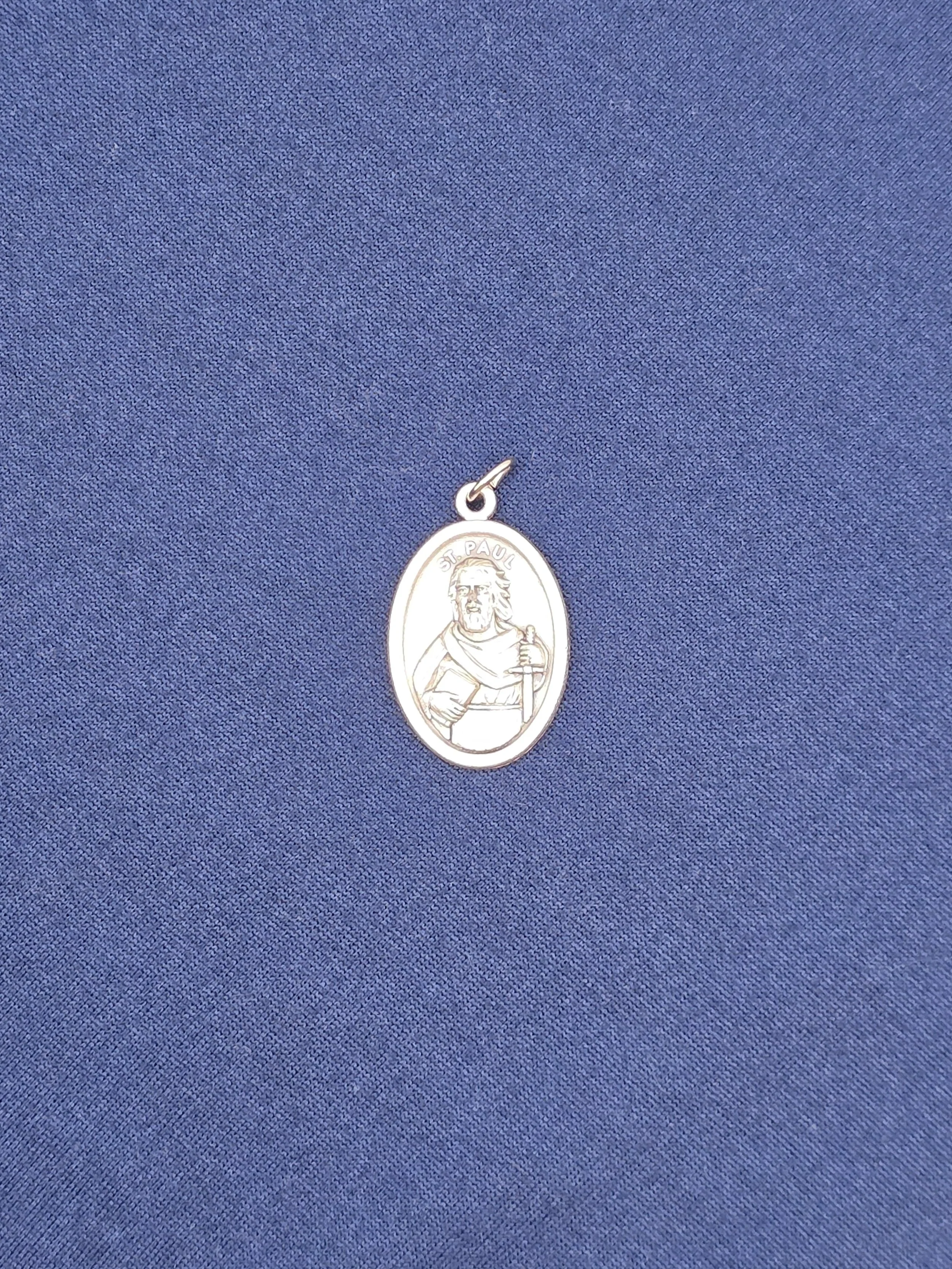
He is often depicted holding a sword (symbol of his martyrdom) and a book (his epistles), or with the three fountains (legend says three springs appeared where his head bounced after being beheaded).
Saint Paul is a powerful example of radical conversion and tireless zeal for spreading the Gospel.
Saint Paul (also known as Saint Paul the Apostle or Saul of Tarsus, c. 5 – c. 67 AD) is one of the most important figures in Christian history and the greatest missionary of the early Church.
Born Saul in Tarsus (modern-day Turkey) to a Jewish family. He was a Roman citizen and a zealous Pharisee who actively persecuted Christians.
Around the year 36 AD, while traveling to Damascus to arrest Christians, he had a dramatic encounter with the risen Jesus. A bright light blinded him and he heard Jesus say, “Saul, Saul, why are you persecuting me?” This event is known as the Conversion of St. Paul.
After his conversion and baptism, he changed his name to Paul and became the greatest apostle to the Gentiles (non-Jews).
He made three major missionary journeys across the Roman Empire, founding many churches.
He wrote 13 letters (epistles) that are part of the New Testament, including Romans, Corinthians, Galatians, and Philippians. These letters form a large part of Christian theology.
He was arrested in Jerusalem, appealed to Caesar, and was eventually martyred in Rome by beheading around 67 AD during Nero’s persecution.
His feast day is June 29 (celebrated together with St. Peter).
Saint Paul is venerated as the patron saint of:
Missionaries and evangelists
Gentiles (non-Jews) and converts
Writers, journalists, and publishers
Theologians
Tent makers and rope makers (his trade)
People with eye problems (because he was blinded during his conversion)
He is often depicted holding a sword (symbol of his martyrdom) and a book (his epistles), or with the three fountains (legend says three springs appeared where his head bounced after being beheaded).
Saint Paul is a powerful example of radical conversion and tireless zeal for spreading the Gospel.