 Image 1 of 1
Saint Philomena (also spelled Philomina) is a mysterious early Christian virgin martyr whose story has captured the devotion of millions.
Very little is known with historical certainty about her life. Her story comes mainly from a 19th-century discovery in the Catacombs of Priscilla in Rome.
In 1802, a tomb was found with the inscription:
“Pax Tecum Filumena” (“Peace be with you, Philomena”)
along with symbols of a virgin martyr: an anchor, arrows, a lily, and a palm. A small vial of dried blood was also found.
According to the private revelations received by Sister Maria Luisa di Gesù in 1833, Philomena was a Greek princess who converted to Christianity. At around age 13, she refused to marry the Roman Emperor Diocletian because she had consecrated her virginity to Christ. She was tortured in many ways (scourged, arrows shot at her, drowned, and finally beheaded) around the year 304 AD during the Diocletian persecution.
Her relics were brought to the Church of Mugnano del Cardinale in Italy in 1805, where many miracles were immediately reported. She became known as the “Wonder Worker” because of the numerous cures and favors attributed to her intercession.
Her feast day is August 13.
Saint Philomena is venerated as the patron saint of:
Children and youth
Virgins and purity
Babies and infants
Desperate or impossible causes
Prisoners
Against sterility and for couples trying to conceive
The sick and those suffering from illness
She is especially loved by young people and those facing seemingly hopeless situations.
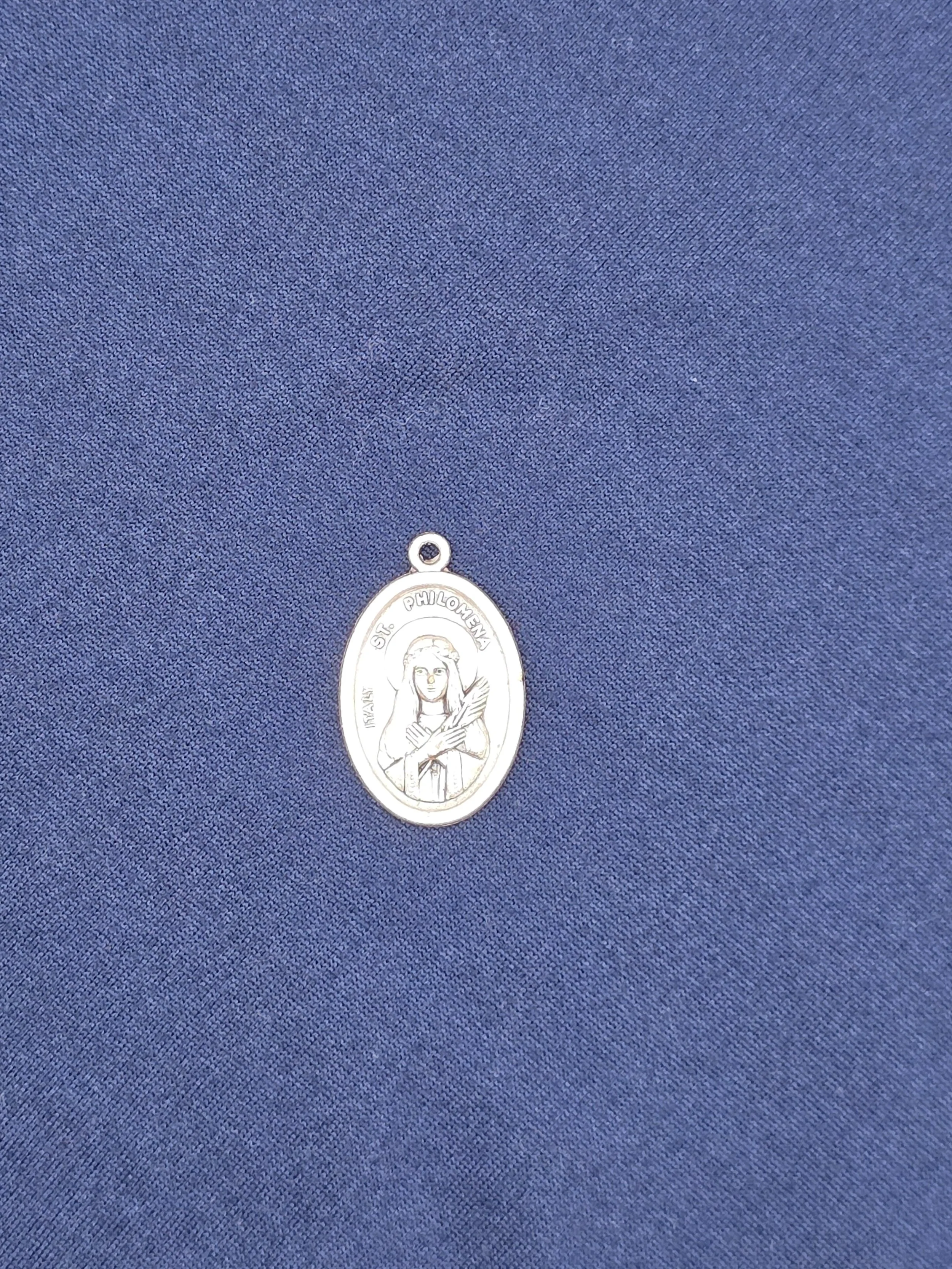
She is usually depicted as a young teenage girl wearing a crown of flowers, holding a palm branch (martyrdom), an anchor, and arrows (symbols of her torture), with a lily for purity.
Note: Because her story is based largely on private revelation rather than solid historical documents, her feast day was removed from the universal Roman Calendar in 1961. However, devotion to her remains very strong worldwide, especially in Italy, the Philippines, and Latin America.
Saint Philomena (also spelled Philomina) is a mysterious early Christian virgin martyr whose story has captured the devotion of millions.
Very little is known with historical certainty about her life. Her story comes mainly from a 19th-century discovery in the Catacombs of Priscilla in Rome.
In 1802, a tomb was found with the inscription:
“Pax Tecum Filumena” (“Peace be with you, Philomena”)
along with symbols of a virgin martyr: an anchor, arrows, a lily, and a palm. A small vial of dried blood was also found.
According to the private revelations received by Sister Maria Luisa di Gesù in 1833, Philomena was a Greek princess who converted to Christianity. At around age 13, she refused to marry the Roman Emperor Diocletian because she had consecrated her virginity to Christ. She was tortured in many ways (scourged, arrows shot at her, drowned, and finally beheaded) around the year 304 AD during the Diocletian persecution.
Her relics were brought to the Church of Mugnano del Cardinale in Italy in 1805, where many miracles were immediately reported. She became known as the “Wonder Worker” because of the numerous cures and favors attributed to her intercession.
Her feast day is August 13.
Saint Philomena is venerated as the patron saint of:
Children and youth
Virgins and purity
Babies and infants
Desperate or impossible causes
Prisoners
Against sterility and for couples trying to conceive
The sick and those suffering from illness
She is especially loved by young people and those facing seemingly hopeless situations.
She is usually depicted as a young teenage girl wearing a crown of flowers, holding a palm branch (martyrdom), an anchor, and arrows (symbols of her torture), with a lily for purity.
Note: Because her story is based largely on private revelation rather than solid historical documents, her feast day was removed from the universal Roman Calendar in 1961. However, devotion to her remains very strong worldwide, especially in Italy, the Philippines, and Latin America.