 Image 1 of 1
Saint Raymond most commonly refers to Saint Raymond Nonnatus (1204–1240), a Spanish Mercedarian friar and missionary.
Born in Portell, Catalonia (Spain), he received the name “Nonnatus” (Latin for “not born”) because he was delivered by Caesarean section after his mother died in childbirth. He joined the Order of Our Lady of Mercy (Mercedarians), founded to ransom Christians captured by Muslim pirates and sold into slavery in North Africa.
Raymond became one of the most active “ransomers.” He traveled to Algeria, personally freed many captives, and when funds ran out, he offered himself as a hostage. While in captivity, he continued preaching the Gospel, converting some Muslims. He was tortured (including having his lips pierced and sealed with a hot iron to stop him from speaking) but survived. He was eventually ransomed and returned to Spain. Pope Gregory IX named him a cardinal, but he died on the way to Rome on August 31, 1240, at about age 36. He was canonized in 1657. His feast day is August 31.
Saint Raymond Nonnatus is widely venerated as the patron saint of:
Pregnant women, expectant mothers, and childbirth
Midwives, obstetricians, and newborn babies
Infants and children
The falsely accused
Priests who defend the seal of confession (confidentiality of the sacrament)
Those suffering from fever
He is especially invoked by women facing difficult pregnancies or labor, and by those seeking protection for unborn children.
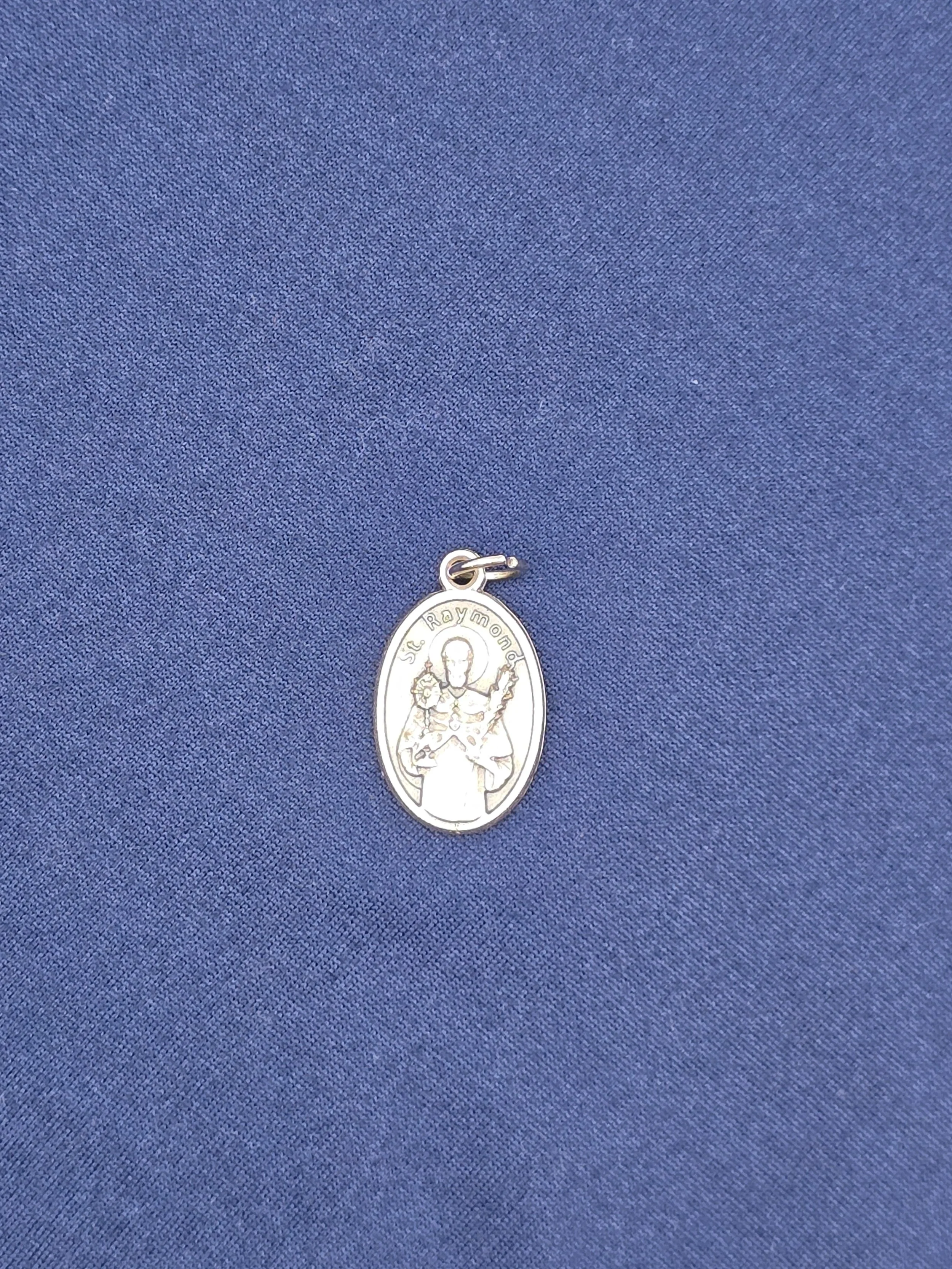
He is usually depicted as a Mercedarian friar with a padlock on his lips (symbol of his torture and silence) or holding the Mercedarian emblem.
Note: There is also Saint Raymond of Peñafort (1175–1275), a Dominican canon lawyer and co-founder of the Mercedarians, who is the patron saint of lawyers and canonists. His feast day is January 7. When people simply say “St. Raymond,” they usually mean Raymond Nonnatus, especially in the context of pregnancy and childbirth.
Saint Raymond most commonly refers to Saint Raymond Nonnatus (1204–1240), a Spanish Mercedarian friar and missionary.
Born in Portell, Catalonia (Spain), he received the name “Nonnatus” (Latin for “not born”) because he was delivered by Caesarean section after his mother died in childbirth. He joined the Order of Our Lady of Mercy (Mercedarians), founded to ransom Christians captured by Muslim pirates and sold into slavery in North Africa.
Raymond became one of the most active “ransomers.” He traveled to Algeria, personally freed many captives, and when funds ran out, he offered himself as a hostage. While in captivity, he continued preaching the Gospel, converting some Muslims. He was tortured (including having his lips pierced and sealed with a hot iron to stop him from speaking) but survived. He was eventually ransomed and returned to Spain. Pope Gregory IX named him a cardinal, but he died on the way to Rome on August 31, 1240, at about age 36. He was canonized in 1657. His feast day is August 31.
Saint Raymond Nonnatus is widely venerated as the patron saint of:
Pregnant women, expectant mothers, and childbirth
Midwives, obstetricians, and newborn babies
Infants and children
The falsely accused
Priests who defend the seal of confession (confidentiality of the sacrament)
Those suffering from fever
He is especially invoked by women facing difficult pregnancies or labor, and by those seeking protection for unborn children.
He is usually depicted as a Mercedarian friar with a padlock on his lips (symbol of his torture and silence) or holding the Mercedarian emblem.
Note: There is also Saint Raymond of Peñafort (1175–1275), a Dominican canon lawyer and co-founder of the Mercedarians, who is the patron saint of lawyers and canonists. His feast day is January 7. When people simply say “St. Raymond,” they usually mean Raymond Nonnatus, especially in the context of pregnancy and childbirth.